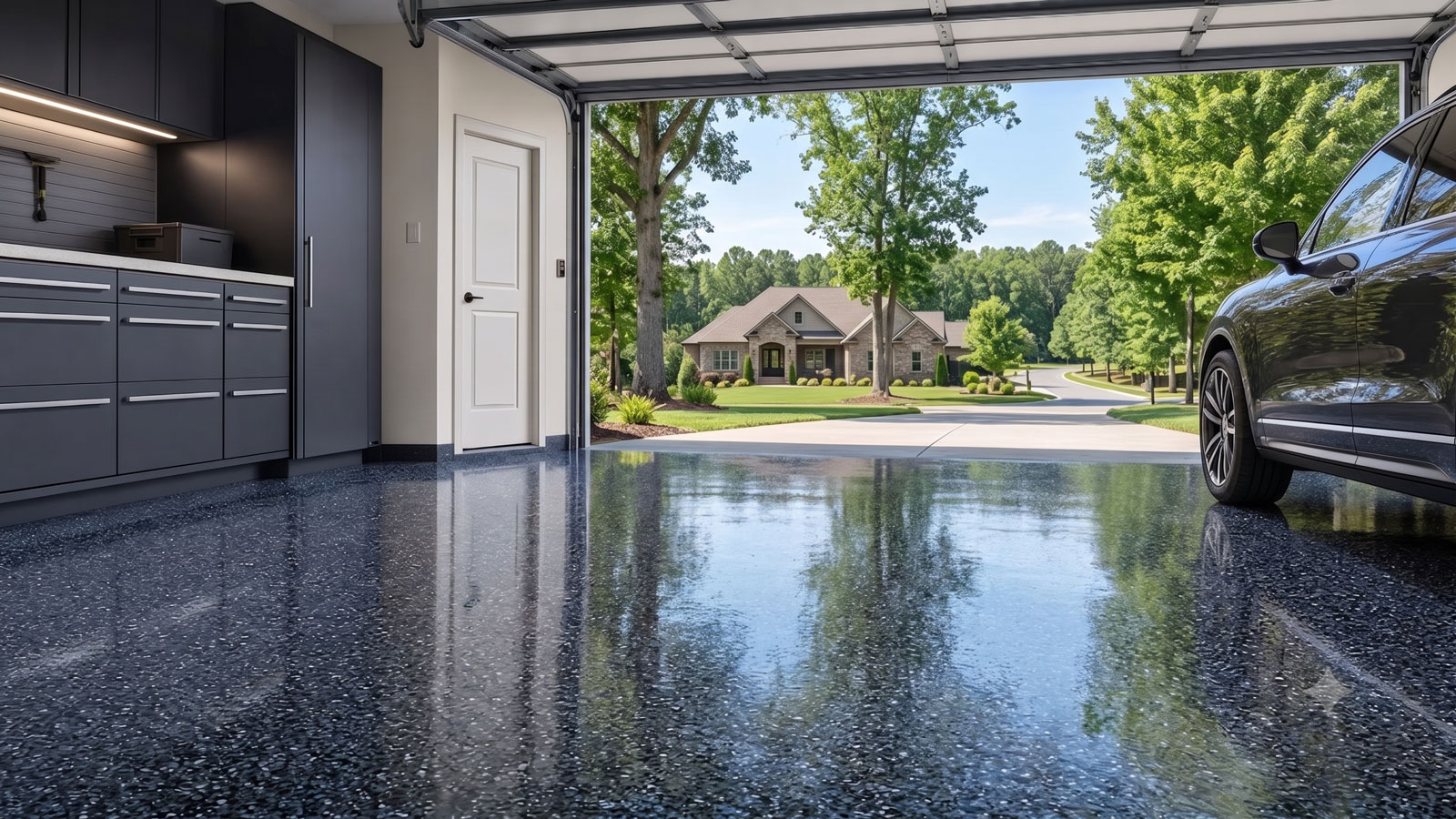
Garage Floor Coating in Sugar Land, TX
Floor Coating Services in Sugar Land, TX
Sugar Land has unusually detailed municipal drainage documentation for an established suburban community. Its City Council adopted a Master Drainage Plan on November 4, 2014, identifying local drainage characteristics, agency responsibilities and future flood-control work. The city's 2019 bond program included ten drainage projects totaling $47.6 million. These facts are not an inspection report for an individual garage; they explain why homeowners should check actual driveway runoff and entry thresholds rather than treating a new floor coating as water-control work.
The plan and bond projects span a city with varied residential development, from Sugar Creek and First Colony to Greatwood, New Territory and other later communities. The published project list includes Sugar Creek drainage improvements, Riverbend inlets, Oyster Creek Dam III and Greatwood Village work. A house in one of those areas does not automatically have a water problem, and its concrete may have been repaired, repoured or previously coated regardless of the building's age.
Warm Gulf Coast weather adds high humidity, hot surfaces near garage openings and seasonal heavy rain. A garage project should start with observed surface condition: previous paint or sealers, pitting, active cracks, oils and any actual moisture indications. Only after that evaluation is it useful to compare epoxy, polyaspartic and decorative-flake finishes, traction, UV exposure and the time vehicles must remain outside.
Local Project Context
Sugar Land's adopted 2014 drainage plan and $47.6 million bond program document specific infrastructure challenges, including Oyster Creek and Greatwood-related projects. For a garage, the practical lesson is to inspect actual water entry and slab history rather than infer problems from citywide drainage investments.
What Affects the Cost of Garage Floor Coating in Sugar Land?
Sugar Land's different development eras and documented drainage planning make a floor-specific estimate more useful than a standard price applied to every two-car garage. The actual prior coating, surface repairs and any observed runoff determine preparation scope.
A contractor should explain which findings require grinding, patching or separate drainage consultation. Municipal drainage projects concern broader systems; they do not themselves justify coating-related remediation inside a particular home.
- Previous surface finish: Sugar Creek and First Colony floors may have accumulated paint or sealers, while later garages can also contain incompatible curing compounds. Inspect rather than assume from the neighborhood.
- Visible concrete damage: Cracks, failed patches, joints and worn concrete require case-by-case evaluation. A decorative topcoat is not a replacement for necessary repair.
- Water at the threshold: The city's bond projects include inlet and channel improvements, but an individual garage needs observed evidence of runoff or seepage before drainage-related work is priced.
- Parking and storage patterns: A workshop, a multi-car family garage and an equipment-storage room bring different oils, obstacles and wear. Cleaning and staging should reflect the actual use.
- Floor geometry: Step-downs, vertical stems, decorative borders, drains and door transitions make prep and application more complicated than bare square footage suggests.
- System and cure requirements: Hot Gulf Coast days, exposure at the door, topcoat options, desired texture and permitted vehicle-return time affect coating material and labor choices.
Call for a clear, project-specific estimate — or request one online.
Sugar Land's Master Drainage Plan and the Garage Door
Sugar Land's City Council adopted the city's Master Drainage Plan in November 2014. It describes physical drainage characteristics, agency jurisdictions and the continuing planning needed to handle stormwater. The city's engineering materials explain that drainage ownership and maintenance responsibilities vary, so one contractor should not promise to resolve every kind of water issue under the label of a garage coating.
The 2019 bond program funded ten drainage projects with an aggregate listed budget of $47.6 million. The portfolio includes improvements around Sugar Creek, Riverbend, Oyster Creek, Austin Park/Chimneystone and Greatwood Village. These are genuine named local infrastructure projects, but they do not establish the condition of any one house or garage.
If water has crossed the threshold, look at driveway grade, drainage inlets, downspouts and the time and place water appears. A damp patch unrelated to rainfall calls for a different line of inquiry from runoff that appears only during storms. The coating contractor may identify symptoms but should distinguish slab evaluation from exterior civil work.
Use that distinction when comparing quotes. A sound coating should be installed over a suitable prepared slab; it cannot raise a doorway, enlarge a storm drain or prevent a river flood. Work to correct outside drainage, if justified, belongs in a separate scope before the interior finish is installed.
From First Colony to Greatwood: Concrete Histories Vary
Sugar Land's established and later-developed neighborhoods supply many possible garage contexts. A home might have an old paint finish, a garage addition, a replacement concrete panel or an apparently newer slab with sealer. The fact that a subdivision was built in a particular era does not reveal the age or condition of the garage concrete today.
The installer should look for lifting under parked tires, bond failure, repaired joints, oil contamination and pitting. Grinding and surface profiling are central preparation tasks, but the exact method must fit the selected system and measured floor condition. Serious movement or instability deserves more than a cosmetic fill.
Southern Texas summers also create differences between an open sunlit threshold and shaded concrete inside. Coating systems have temperature, humidity, moisture and curing limits that should control scheduling. An advertised fast-return product cannot compensate for unsuitable substrate conditions.
Match finish texture and layer specification to household use. Rainwater tracked into a garage may make traction important; frequent workshop cleaning may change the preferred surface texture. Ask for samples and a written schedule of preparation, repairs, coating, topcoat and when vehicles can safely return.
Frequently Asked Questions
Does Sugar Land's drainage bond program prove my garage is flood-prone?
No. The city's investment list documents public drainage projects, not defects at specific addresses. Examine water-entry history and local grading separately.
Why does the city's 2014 drainage plan matter to homeowners?
It identifies agencies and drainage responsibilities. That encourages distinguishing public-system drainage concerns from private threshold issues before promising that coating will solve water problems.
Can an old Sugar Creek garage floor still be coated?
Possibly. House age is not a diagnosis. Inspect cracks, coatings, moisture and concrete soundness; suitable material may be prepared and coated without replacing an entire slab.
Is a full-flake finish practical in Gulf Coast humidity?
It can be, when the complete system is applied within manufacturer limits on a properly prepared substrate. Choose texture and topcoat based on use and conditions.
What should a Sugar Land estimate explain?
It should specify preparation, paint removal, repairs, any justified moisture evaluation, coating layers, traction and accurate cure times rather than only quoting square footage.
Sugar Land Neighborhoods & Local Context
Phone Quote Line
Speak with a floor coating professional about your project and get a realistic estimate range.
(346) 545-5453Typical Two-Car Garage
$3,000–$5,500
Planning guidance for a typical two-car garage. Final pricing depends on floor size, concrete condition, preparation, coating type, and finish options.
Helpful Guides
Other Service Areas